
DRIVING FUNDAMENTAL RESEARCH & IMPACT
Some of the most important breakthroughs happen when researchers are given the time and space to look beyond established boundaries. This year, CIFAR researchers continued to advance bold work driving real-world impact: from developing new frameworks to understand and interrupt cycles of hate, to challenging long-standing assumptions about ancient groundwater, to uncovering how breast milk antibodies help shape the infant gut microbiome. These stories show the power of fundamental research.
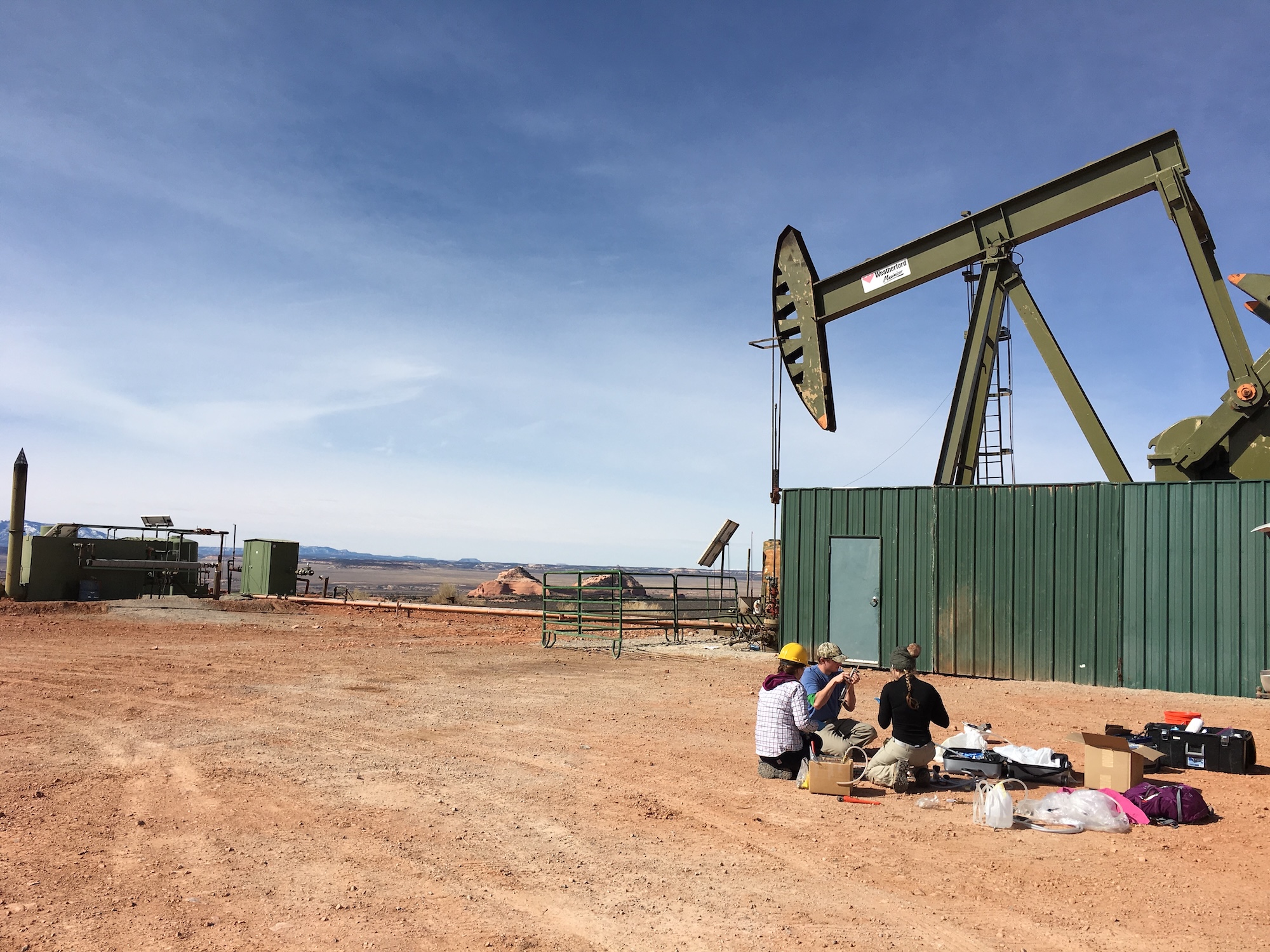
Researchers discover link between ancient groundwater and climate change
What began as a CIFAR-funded workshop among members of Earth 4D: Subsurface Science & Exploration became a high-profile paper in Nature Geoscience, offering a new way to understand “fossil groundwater” and its role in a changing climate. The work challenges a long-standing assumption that groundwater stored in an aquifer for thousands of years is non-renewable. The researchers found that some aquifers containing very old water can still respond relatively quickly to modern climate conditions, including changes in recharge from rainfall or snowmelt.
This means groundwater sustainability depends not only on the age of the water, but also on how quickly the aquifer system responds to present-day environmental change. As communities face growing pressure on freshwater resources, this research offers a more precise way to assess when and how fossil groundwater can be used sustainably. This work was led by Michael Manga (Fellow; University of California, Berkeley), Jeffrey McDonnell (Advisor; University of Saskatchewan), Jennifer McIntosh (Fellow; University of Arizona), Barbara Sherwood Lollar (Co-Director; University of Toronto) and Richard Taylor (Fellow; University College London).
Spotlight
Future Flourishing program members Alejandra Echeverri (CIFAR Azrieli Global Scholar, 2024-2026; University of California Berkeley) and Kulbhushansingh Suryawanshi (Fellow; Nature Conservation Foundation) are working with farmers in India’s Spiti Valley to understand how traditional crops can support climate-resilient food systems. Their study found that black peas, a nearly extinct crop cultivated for generations in the Indian Trans-Himalaya, outperformed cash crops under drought-like conditions. The work also produced the first whole-genome sequencing data for black peas, revealing strong genetic diversity and high protein content. This work underscores how traditional crops and Indigenous knowledge can offer solutions to future food security in a warming world.
Finding new ways to fight fungal infections
Fungal infections are an urgent and growing health threat, yet the world has far fewer antifungal drugs than antibiotics. As drug resistance increases, researchers are developing new treatments to stop dangerous infections before they become harder to control. Work led by Fungal Kingdom: Threats & Opportunities program members Leah Cowen (Co-Director; University of Toronto), Joseph Heitman (Co-Director; Duke University), Gerard Wright (Fellow; McMaster University) and James Kronstad (Power Corporation Fellow; University of British Columbia) has identified new compounds that can enhance the potency of existing antifungal drugs, uncovering promising new drug candidates and revealing how disease-causing fungi grow and survive.
This work will strengthen the next generation of antifungal treatments, advancing drug discoveries that could better protect people from life-threatening fungal infections.
Rethinking how AI understands the world
For years, much of the AI field focused on the idea that bigger models, more data and more computing power would lead to better intelligence. Researchers in CIFAR’s Learning in Machines & Brains program have long challenged this “scaling-only” hypothesis. Instead, they argued that true intelligence requires world models — internal systems that represent how reality works, allowing an AI to predict cause-and-effect, reason through counterfactuals, and plan beyond simple text prediction. That question is reshaping the field. This year, researchers in the program advanced work showing the limits of scaling alone and exploring new ways to build AI systems that can reason more flexibly.
Fellow Kyunghyun Cho’s (New York University) seminal paper, “Scaling Laws Are Unreliable for Downstream Tasks,” demonstrates that merely expanding model size does not automatically guarantee competence in complex, real-world applications. At the same time, Yoshua Bengio (Advisory Committee Chair, Canada CIFAR AI Chair at Mila; Université de Montréal) and colleagues introduced Recursive Self-Aggregation, a new approach to building systems that can reason dynamically. Meanwhile, work by Advisor Bernhard Schölkopf (ETH Zürich, Max Planck Institute for Intelligent Systems) advanced research on causal representation learning, helping AI systems better understand why things happen, not just what is likely to happen next.
Together, these complementary breakthroughs — incubated and refined through sustained CIFAR convenings — are helping lay the groundwork for a new era of AI systems capable of genuine reasoning and world understanding.
Want to learn more? Explore CIFAR’s latest Impact Report